
What Balm, FL Garage Doors Actually Need Before Winter
The short answer: check hardware for rust left over from storm season, lubricate every moving part before temperatures drop, reseal gaps where cold fronts push air through, and test the safety reverse before the door sees heavier holiday traffic. None of that requires snow or ice to matter here.
Winter in this part of Florida doesn't look like winter anywhere else. You're not scraping frost off a door panel. But the shift from the wet, humid stretch of late summer and early fall into drier, cooler air does real things to a garage door, and most homeowners never connect the dots until something sticks, grinds, or won't close evenly.
Why the Season Change Still Stresses the Door
Garage doors in Balm spend months absorbing moisture from humidity and afternoon downpours. Wood swells, steel hardware holds onto dampness, and springs and cables sit under tension in a damp environment longer than most parts ever see in drier climates. When the air finally dries out and nighttime temperatures drop into the 40s and 50s, that moisture doesn't just disappear cleanly. Metal contracts. Lubricant that was fine in August turns sluggish or gummy in cooler air. Wood that swelled all summer can start to shrink and crack as it dries out. And any rust that quietly started forming during hurricane season becomes more obvious once things cool down and surfaces are less constantly wet.
On top of that, this is the stretch right after hurricane season winds down. Doors that took wind pressure, flying debris, or just weeks of being opened and closed in storm prep often have small issues that never got addressed. Winter is the natural point to catch them before they turn into a spring repair call.
The Pre-Winter Checklist
1. Inspect Hardware for Rust and Corrosion
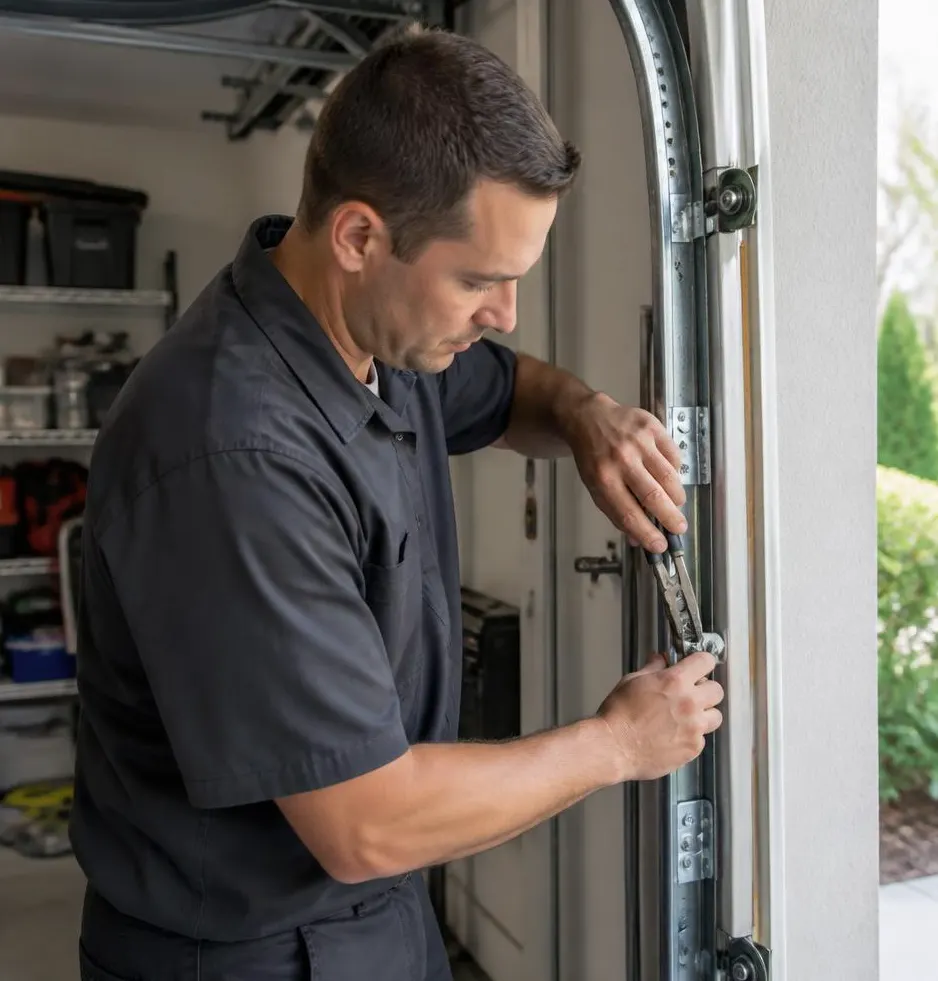
Walk the track, hinges, springs, and the bottom bracket with a flashlight. Surface rust on tracks can usually be wiped down and treated, but rust forming on a spring coil or fraying a cable strand is a different story — that's a sign the part is weakening, not just discoloring. If you see reddish streaks dripping down the door panel itself, that's often corrosion starting at a hinge or screw and it will spread if ignored.
2. Lubricate Everything That Moves
Hinges, rollers, the track, and the spring itself all need a fresh coat of garage-door-specific lubricant (not WD-40, which is a cleaner, not a lubricant, and burns off too fast). Do this now, before the cooler, drier air thickens up whatever is already on there. A door that's been quiet all summer can suddenly start squeaking or grinding once temperatures dip — that's usually just old lubricant failing, not a new problem.
3. Check Weatherstripping and Bottom Seals
Cold fronts here don't bring freezing weather most years, but they do bring wind, and a gap at the bottom of the door or around the frame lets that wind, dust, and the occasional bug or small animal straight into the garage. Press a finger along the bottom seal — if it's stiff, cracked, or doesn't spring back, it's past its useful life. Replacing it is inexpensive and worth doing before, not after, the first real cold snap.
4. Test the Balance and Auto-Reverse Safety
Disconnect the opener and lift the door halfway by hand. It should stay in place on its own. If it falls or shoots up, the spring tension is off, and that's not a DIY adjustment — a miscalibrated spring under load is genuinely dangerous. Separately, test the auto-reverse by placing a block of wood in the door's path while closing. It should stop and reverse immediately. With more people in and out of the garage over the holidays, this is the one safety check not worth skipping.
5. Check the Opener's Battery Backup
Shorter days mean the garage door gets used in the dark more often, and storm season occasionally leaves behind power blips even after the worst weather has passed. If the opener has a battery backup, confirm it's holding a charge. If it doesn't have one, it's worth considering, especially for anyone who uses the garage as a main entry point.
6. Look at the Door Material Itself
Wood doors that swelled over the humid months can crack or warp as they dry out in cooler, less humid air. Check for new gaps at panel seams or paint that's starting to separate. Steel doors should be checked for any dents or bowing from storm season that might now be more visible as temperatures change and metal contracts slightly.
When to Call Balm Garage Door
If the door doesn't hold its position when lifted halfway, if you hear grinding that lubrication didn't fix, or if a cable looks frayed anywhere along its length, stop testing it yourself and call us. Those are classic signs of spring or cable failure, and we handle garage door spring repair and garage door cable repair regularly this time of year, right after storm season has quietly worn parts down. If the door is coming off its track or rollers are grinding instead of rolling smoothly, that's a job for our roller replacement and off-track door repair service rather than a weekend fix. We show up fast, diagnose what's actually wrong instead of guessing, and get it handled before small issues turn into a door that won't open at all.
If your garage door has been fighting you since the weather started turning, give Balm Garage Door a call. We serve Balm, Riverview, Lithia, Wimauma, Sun City Center, Ruskin, Brandon, and Gibsonton, and we'd rather fix it now than have you stuck with a stuck door in December.