
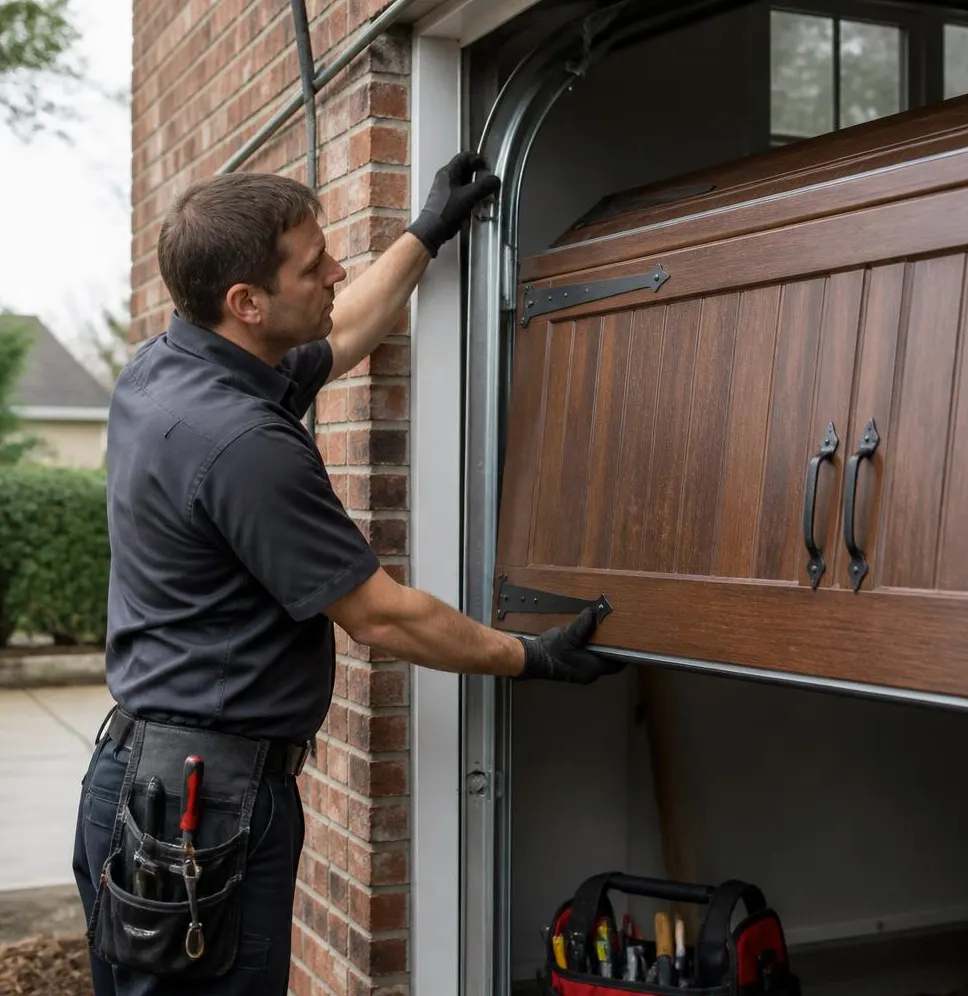
On a typical storm-prep call in this area, the pattern looks the same. A homeowner heard wind warnings in the forecast, walked out to the garage, and noticed the door flexing when they pushed on it, or a track that's slightly bent from a storm two seasons back that never got fixed. Sometimes it's a door that was installed years ago under different wind standards and was never upgraded. By the time someone calls, the door is already the most vulnerable part of the house, and most people don't realize that until a technician points it out.
Why the Garage Door Is the Weakest Wall in the House
A garage door is the largest moving opening in most homes, and it's built with thinner material and more moving parts than any wall around it. When wind pushes against a house, pressure builds up on the windward side and pulls on the leeward side. If the garage door fails, that pressure has nowhere to go but inside, and it can push upward on the roof structure from underneath. This is why wind-load engineering for garage doors exists: tracks, end hinges, struts, and the attachment points all have to be rated to handle sustained pressure without buckling.
In Florida's hurricane-prone counties, doors are commonly rated to resist specific wind pressures, and older doors installed before current wind-load standards were adopted often don't meet that bar. A door that looks fine on a calm day can still be structurally outmatched once sustained winds and gusts start working on it.
What a Technician Actually Checks During a Storm-Prep Visit
When we're called out ahead of a storm system, the inspection focuses on a handful of specific points, not just a general look at the door:
- Track alignment: Even a slight bend in the track reduces how much lateral force the door can handle before it pops off the rollers.
- Hinges and end brackets: These take the brunt of wind-load stress. Cracked, rusted, or loose hinges are a common failure point.
- Struts and reinforcement: Horizontal struts across the back of the door panels are what actually resist wind pressure. Doors without them, or with struts that have come loose, flex more than they should.
- Spring tension: Springs under the wrong tension put uneven stress on the door during wind gusts, which can accelerate track and roller wear.
- Weatherstripping and bottom seal: Gaps here let wind-driven rain push past the door during the heavy afternoon downpours this area gets, which leads to water pooling against the garage floor and slab.
- Opener attachment and manual release: If power goes out during a storm, you need to know the manual release still works smoothly, without forcing it.
Rust, Swelling, and Moisture Damage You Can't Ignore
Humidity and salt air do slow, steady damage that often goes unnoticed until it shows up as a sudden failure. Steel rollers and tracks develop surface rust that spreads into pitting, which weakens the metal exactly where it needs to flex under wind load. Wood or composite panels absorb moisture and swell, which can throw off the fit of the door in its frame and strain the opener motor as it tries to push a door that no longer moves freely.
If you've noticed a door that's gotten noticeably harder to open by hand, or rollers that grind instead of roll smoothly, that's usually moisture-related wear, not just age. Left alone, it turns a minor roller replacement into a bent track or a cracked panel once a storm puts real stress on the system.
Practical Steps to Take This Week
None of this requires waiting for a storm warning to act. A few things homeowners can realistically do now:
- Visually check the tracks for gaps, bends, or rust buildup along the full length, not just near the bottom.
- Test the door balance by disconnecting the opener and lifting the door halfway by hand. It should stay in place. If it falls or shoots up, the springs are out of balance and under incorrect tension, which matters even more during high wind.
- Inspect hinges and bolts for rust streaks or looseness, and tighten what you can safely reach.
- Clear weep holes and tracks of debris from recent storms so water has somewhere to drain instead of pooling against the door seal.
- If the opener has a battery backup, confirm it still holds a charge, since power outages are common during storm season here.
If any of this reveals bent components, uneven movement, or a door that simply doesn't feel solid when you push on it, that's past the point of a homeowner fix.
When to Call Balm Garage Door
Call us when the door is flexing noticeably in wind, when a track is visibly bent, when springs feel off-balance, or when you're not sure your current door was ever rated for the wind pressures this area sees. We handle garage door spring repair to correct tension issues before they turn into a bigger failure, and off track door repair when a storm or daily wear has already knocked things out of alignment. We'll also tell you honestly when reinforcement or a newer wind-rated door makes more sense than patching an older one, rather than selling you something you don't need.
If you're in Balm, Riverview, Lithia, Wimauma, Sun City Center, Ruskin, Brandon, or Gibsonton and want your garage door checked before the next system moves through, call Balm Garage Door. We show up fast and get it done right.